Surfaces Built to Handle Daily Traffic
Asphalt Paving in Wilton for driveways, roads, and parking areas that endure years of vehicle use and weather exposure
Asphalt surfaces crack and deteriorate when the base beneath them wasn't prepared correctly, when the asphalt mix was applied too thin, or when edges weren't compacted enough to hold their shape under load. GM Grading and Paving installs asphalt paving for residential driveways and commercial parking lots throughout Wilton, focusing on base preparation that prevents the most common failure patterns seen in Central Valley climates. You need new asphalt when your current surface has widespread cracking, when gravel driveways create dust and maintenance problems, or when property improvements require a durable, weather-resistant surface.
The installation process layers compacted base rock over properly graded soil, applies a tack coat to bond the asphalt to the base, and finishes with hot-mix asphalt rolled to the thickness your traffic load requires. Residential driveways typically use a two to three-inch asphalt layer, while commercial parking areas handling heavier vehicles require thicker applications and reinforced edges.
Request a site visit and custom quote to evaluate your property's paving requirements.
How Asphalt Installation Addresses Surface Durability
Asphalt work begins with verifying the base is level, compacted, and sloped for water runoff, because any settling or drainage problem in the base transfers directly into the asphalt above it. The hot-mix asphalt is spread evenly across the prepared base, then compacted with a roller while still warm to eliminate air pockets and bond the aggregate together into a solid mat. Edge compaction receives extra passes because that's where most residential driveways begin to crumble when vehicles drive on and off repeatedly.
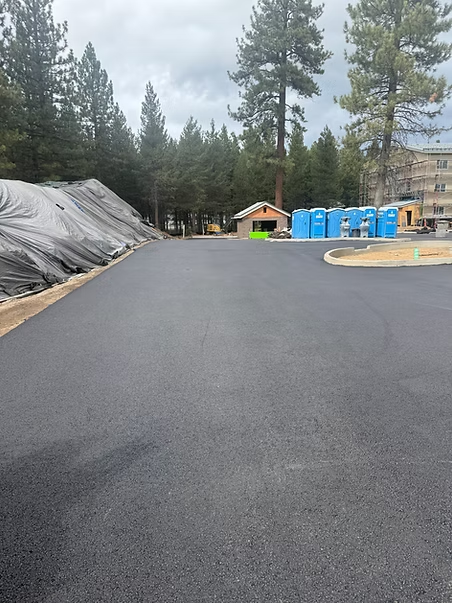
After installation, the surface appears uniformly dark with a slight texture from the aggregate, and it sheds water toward the edges rather than pooling in low spots. Vehicles no longer kick up gravel or create ruts, and the surface remains firm under weight rather than flexing or cracking. Properly installed asphalt resists the thermal expansion and contraction common in areas where summer temperatures exceed one hundred degrees and winter nights drop below freezing.
The service includes base inspection and any necessary repair, application of tack coat, asphalt installation, and compaction to specifications. It does not include seal coating, which is a separate maintenance service applied after the asphalt has cured, or repairs to underlying drainage issues that require grading work before paving can proceed.
Answers to Frequent Service Questions
Asphalt decisions involve understanding how thickness, base quality, and climate affect longevity, so property owners typically want to know about curing times, maintenance needs, and what differentiates quality installations.
How long before the asphalt surface can handle vehicle traffic?
Light vehicles can use the surface within twenty-four hours, but the asphalt continues curing for several months, so heavy loads and sharp turns should be minimized during the first few weeks to prevent surface damage.
What base preparation does asphalt paving require?
The base must be graded to proper slope, compacted to at least ninety-five percent density, and free of organic material or soft spots that would allow settling, which is why base inspection happens before any asphalt is delivered to the site.
Why do some asphalt driveways last decades while others crack within years?
Thickness, base quality, and edge support determine longevity more than the asphalt mix itself, and installations that skimp on base depth or compaction fail early regardless of surface quality.
How does Central Valley weather affect asphalt performance?
Summer heat softens asphalt temporarily, making it vulnerable to indentation from heavy vehicles or sharp objects, while winter freeze-thaw cycles exploit any existing cracks by expanding water trapped in the surface layer.
What indicates that a driveway needs full replacement rather than resurfacing?
Widespread alligator cracking, large sections of sunken pavement, or visible base failure mean the structural integrity is compromised and resurfacing would only postpone the inevitable replacement.
GM Grading and Paving completes asphalt installations with attention to base preparation and edge detail, so your paved surface performs as expected under real-world use. Arrange a property evaluation to review your site conditions and receive a project estimate based on actual measurements.